
The Future of Aquatic Architecture: Trends & Innovations
We’ve moved past the era where water was just a decorative “add-on” like a fountain in a lobby or a standard pool in the backyard. Nowadays, aquatic architecture has evolved into a high-stakes, multidisciplinary field. It’s where technology, ecology, and storytelling collide.
As we face increasing urban density and climate pressures, we aren’t building near water anymore; we’re building with it. Architects are fundamentally rethinking how humans interact with the “blue” parts of our planet, turning water into a functional driver for sustainability and well-being.
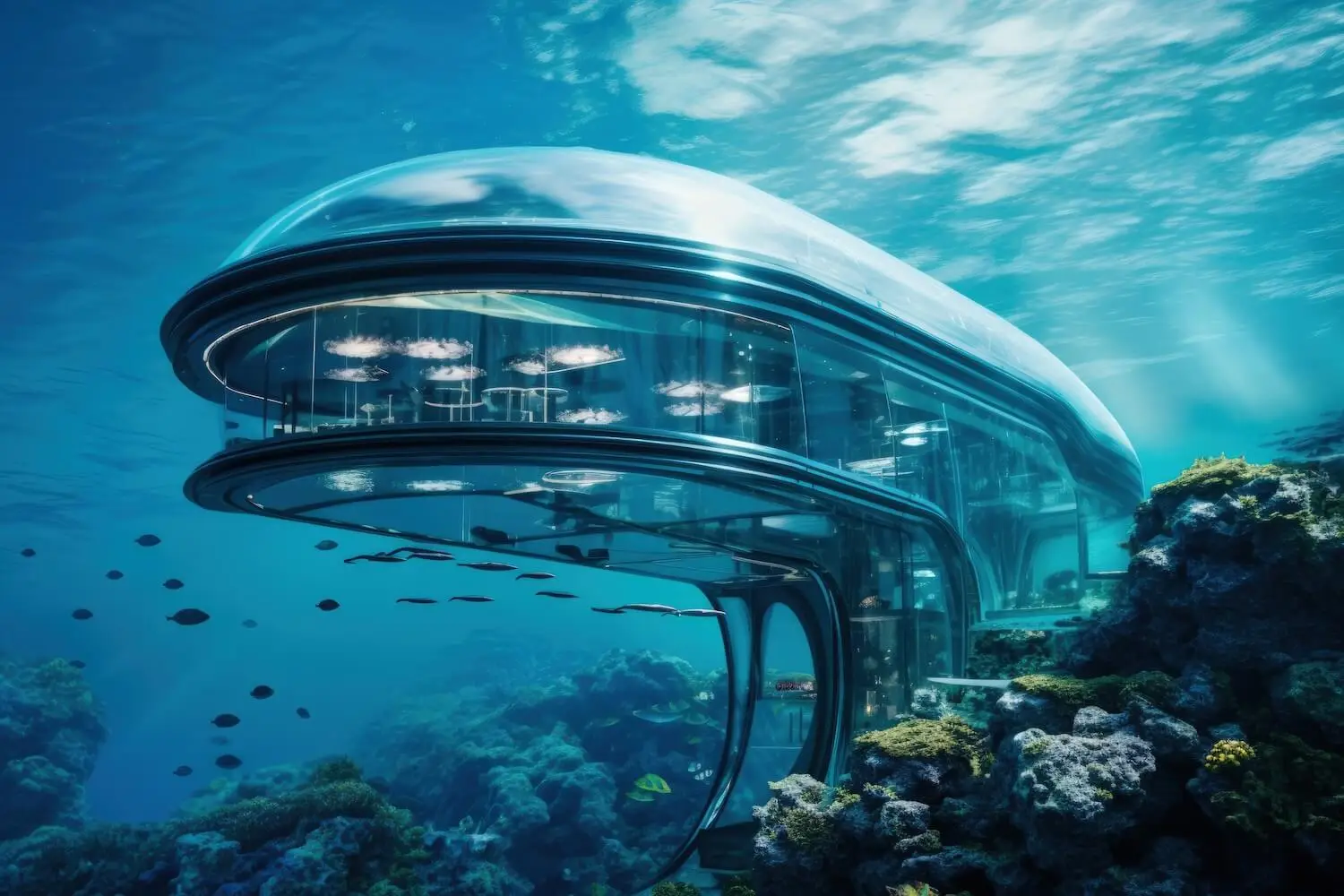
Table of Contents
The Evolution of Aquatic Architecture
At its core, aquatic architecture integrates water into the built environment to create functional, emotional, and ecological value. Water features actively shape microclimates, improve well-being, and support biodiversity.
Modern projects blend architecture and aquatic landscaping to produce spaces that are:
- Climate-responsive
- Socially engaging
- Environmentally regenerative
From infinity pools to artificial lagoons, water is now a design driver rather than an accessory.
1. From “Pretty Ponds” to Regenerative Living Systems
In the past, aquatic landscaping was mostly about aesthetics. Just think of reflecting pools and decorative fountains. Today, the trend is shifting toward regenerative design.
Modern projects are creating self-sustaining ecosystems that:
- Filter water naturally: Using reeds and biofiltration instead of heavy chemicals.
- Support biodiversity: Creating habitats for local flora and marine life.
- Manage microclimates: Actively cooling urban heat islands and improving air quality.
Water is no longer just an accessory; it’s a hard-working layer of city infrastructure.
2. The Rise of the Underwater Landscape
We’re seeing a massive expansion of the underwater landscape. It’s about putting humans inside the environment.
- Immersive Spaces: We’re seeing a surge in underwater restaurants, research hubs, and even hospitality suites.
- Panoramic Views: Thanks to advancements in pressure-resistant materials and specialized lighting, we can now create seamless transitions between land and sea.
- Coexistence: Leading architects are collaborating with marine biologists to ensure these structures act as artificial reefs, supporting the ocean rather than disrupting it.
3. Floating Architecture: The Climate Frontier
With rising sea levels, floating architecture is becoming a necessity. These aren’t just houseboats; we’re talking about modular, amphibious neighborhoods that rise and fall with the tides.
- Flood Resilience: Designing homes that stay dry regardless of water level changes.
- Urban Expansion: Creating “blue” districts in dense coastal cities like Hong Kong or Amsterdam to ease land pressure.
- Hybrid Districts: Designing urban zones that blur the line between solid ground and the open water.
4. Smart Aquatic Environments
The future of water is digital. Smart aquatic environments are now utilizing AI and automation to handle the “boring” stuff so we can enjoy the experience.
- AI-Powered Safety: Systems that monitor pools and lagoons in real-time to prevent accidents.
- Data-Driven Maintenance: Sensors that track water quality, temperature, and energy consumption, adjusting systems automatically for peak efficiency.
- App Integration: Giving users granular control over lighting, acoustics, and water movement at the touch of a button.
5. Biophilic and Wellness-Driven Design
We’ve always known water feels good, but biophilic design is now proving it with data. The psychological impact of water, lowering cortisol and boosting mood, is being baked into modern architecture.
- Wellness-First: Integrating multi-sensory water features (sound, light, and motion) into residential and hospitality designs.
- Nature-Integrated Zones: Creating “spa-like” environments in public spaces to help stressed-out city dwellers reconnect with the natural world.
6. Materials, Sustainability, and Marine Integration
Future-proofing aquatic architecture means using materials that don’t harm the very environment they inhabit.
- Eco-Friendly Construction: Prioritizing non-toxic, marine-safe materials and low-impact building methods.
- Designing for Biodiversity: Building structures that encourage coral growth and fish nesting, turning every submerged wall into a living reef.
7. The Experience Economy of Water
In 2026, space is an experience. Aquatic architecture is at the heart of the “Experience Economy,” creating spatial narratives that people want to share.
- Memorable Destinations: From underwater dining to floating hotels, water-based design creates high-value, “Instagram-worthy” moments.
- Multi-Sensory Engagement: Using water to create a sense of wonder, making the environment feel more like a story than just a building.
What’s Next for Aquatic Architecture?
Looking ahead, aquatic architecture will be defined by five major directions:
- Hybrid Environments: Spaces that seamlessly blend land, water, and underwater zones.
- Climate-Responsive Design: Architecture that adapts dynamically to weather and sea-level shifts.
- Viable Underwater Living: Moving beyond tourism into research and long-term habitats.
- AI-Integrated Water Systems: Smart ecosystems that self-regulate and evolve over time.
- Regenerative Landscaping: Designs that actively restore ecosystems rather than just “minimizing harm.”
Final Thoughts
Aquatic architecture has officially moved from a niche luxury to a central pillar of future design. By combining aquatic landscaping with smart technology and floating architecture, we are building a more resilient, experiential, and sustainable world. In a world increasingly shaped by water, whether through climate challenges or design opportunities, the question is no longer if water will matter in architecture… It’s how far we can take it.