
Enhancing Visitor Experience and Animal Welfare with Virtual Zoo Technology
The concept of a virtual zoo has evolved far beyond being a high-tech “gimmick” layered over a physical exhibit. Today, researchers and park designers view digital technology as a bridge that connects visitor education, animal enrichment, and conservation research in a single ecosystem.
From the early days of using basic augmented reality (AR) to deepen guest engagement, we have moved into an era where a digital zoo is a vital tool for public engagement. It has nothing to do with replacing the real animal encounter; it’s about adding the context, story, and accessibility that a physical sign simply can’t provide.
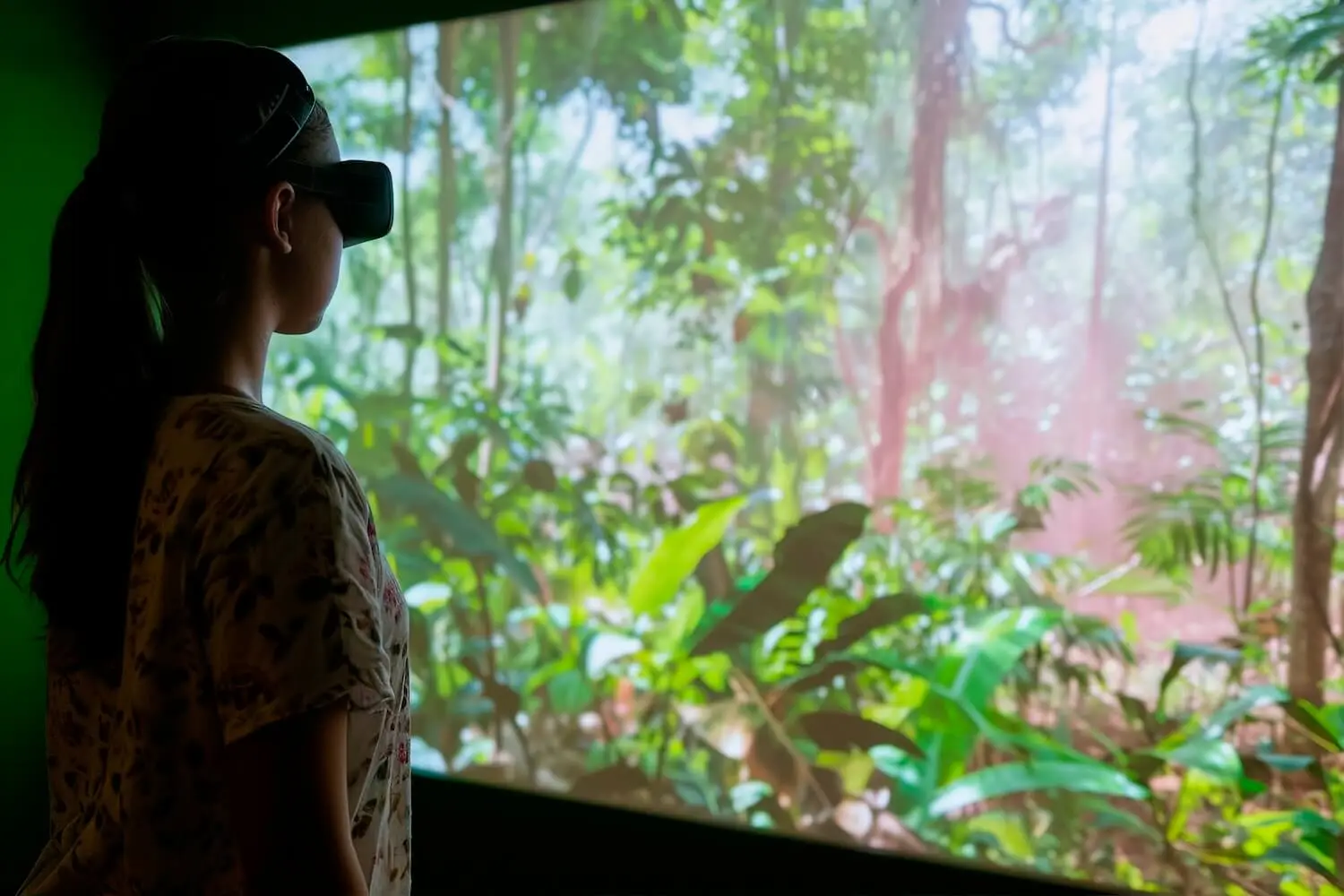
Table of Contents
Why the Virtual Zoo Matters Now
Modern animal parks are asked to do several jobs at once: entertain, educate, inspire conservation action, and maintain strong standards of animal care. Research on animal-visitor interactions shows that visitor experience and animal welfare are closely linked, while reviews of zoo welfare note that the public increasingly expects clear evidence of good wildlife care. That makes the design of any digital zoo experience a real welfare issue, not just a UX decision.
A well-built virtual zoo tour can help visitors understand what they are seeing, why the animals live in specific habitats, and how conservation work happens behind the scenes. A good virtual zoo adds context, story, and accessibility. That is why the best projects pair live exhibits with layered digital interpretation rather than treating technology as decoration.
How Virtual Zoo Technology Transforms the Visitor Experience
The best visitor experiences happen when technology makes an animal feel more understandable, not more distant. This is where digital safari exploration becomes a game-changer.
Instead of passively reading a plaque, guests can use a virtual safari interface to:
- Follow a guided story: Move through habitats with a narrative that explains the species’ journey.
- Unlock behavior clips: See what the animal does at night or during active hunting or foraging periods that might not coincide with park hours.
- Engage with “Hotspots”: Tap on specific areas of an enclosure to learn about hidden enrichment tools or botanical features.
This active role makes learning feel like a discovery rather than a lecture. Furthermore, a virtual zoo tour solves a major accessibility gap. It allows families with mobility constraints, remote classrooms, and visitors with limited time to experience the educational heart of the zoo from anywhere in the world.
Supporting Animal Welfare Through Technology
In any digital zoo project, the first rule is “the animal comes first”. Technology should reduce stress, not create it.
Digital Enrichment
Research shows that designing with carefully implemented tech, like interactive interfaces or sensors, can provide cognitive stimulation for animals. This “digital enrichment” keeps animals curious and engaged, offering them a level of control over their environment.
The “Invisible” Observer
High-tech sensors and cameras allow researchers to monitor animal health and behavior without the intrusive presence of humans. This data helps keepers adapt habitats in real-time, ensuring the animal’s environment is always optimized for its well-being.
Shaping Visitor Behavior
Perhaps the most underrated benefit of a virtual safari is its ability to “train” the humans. When guests use digital tools to learn about an animal’s sensitivity to noise or its need for privacy, they tend to behave more respectfully at the exhibit. Better information leads to calmer, more responsible interactions.
What Makes “Digital Safari Exploration” Successful?
To construct and plan an effective digital experience, designers usually follow four key principles:
- Species-Specific Content: A lemur experience should feel different than a lion experience. The tech must reflect the unique biology and conservation story of that specific animal.
- Contextual Micro-Experiences: Zoo visitors move fast. Content should be broken into short, punchy units. A 30-second behavior clip is often more effective than a 10-minute video.
- Non-Distracting Interactivity: The tech should enhance the view of the animal, not distract the guest from the live encounter.
- Measurable Impact: Zoos need to track whether the digital experience actually improved visitor learning or had a positive effect on animal stress levels.
The “Best Practice” Checklist for a Virtual Zoo
If you are planning to integrate a virtual zoo tour or safari into your facility, keep these principles in mind:
- Welfare First: Does this tech create noise, light, or physical intrusion for the animal?
- Storytelling Over Spectacle: Use AR and VR to tell a conservation story, not just to show off cool effects.
- Accessibility: Is the content easy to use for all ages and on multiple device types?
- Optional Engagement: Don’t force the tech. Let guests choose how deep they want to dive into the digital layer.
- Continuous Revision: Be ready to pull back or update a feature based on animal response data.
FAQ
What exactly is a virtual zoo?
A virtual zoo uses digital tools like AR, VR, and mobile apps to add a layer of education and interaction to the physical zoo experience.
Does a digital zoo replace real animals?
No. It is designed to complement the live experience by providing context, accessibility, and enrichment that isn’t possible with physical materials alone.
How does digital safari exploration benefit conservation?
By making the “hidden” side of conservation work visible. It allows visitors to see field work, breeding programs, and rescue efforts that happen behind the scenes.
The Future of the Digital Zoo
The future is about using technology to build a stronger bridge between humans and the natural world. When a virtual safari is done right, it leaves the visitor with a profound respect for the animal and a clear understanding of why its protection matters.
At the same time, the best virtual zoo experiences are designed around two outcomes at once: a richer visitor journey and better animal welfare. When zoos use AR, VR, and mobile storytelling responsibly, they turn every virtual zoo tour into a meaningful virtual safari, one that educates, engages, and respects the animals at the center of the experience. In the end, the most successful virtual zoo tour isn’t the one with the flashiest graphics, but the one that makes the guest look at the real animal with a brand-new sense of wonder.