
Public Aquarium Design: A 5-Year ROI Feasibility Framework
Designing a public aquarium is more than just an architectural or engineering feat — it’s a long-term investment in education, tourism, and sustainable development. Today, public aquarium design involves cutting-edge technologies, strategic planning, and a focus on long-term profitability. From the construction of aquarium infrastructure to integrating advanced aquarium technologies, every decision impacts the visitor experience and the financial return. In this guide, we explore how a robust 5-Year ROI feasibility framework can help ensure your public aquarium project is economically viable and future-proof.
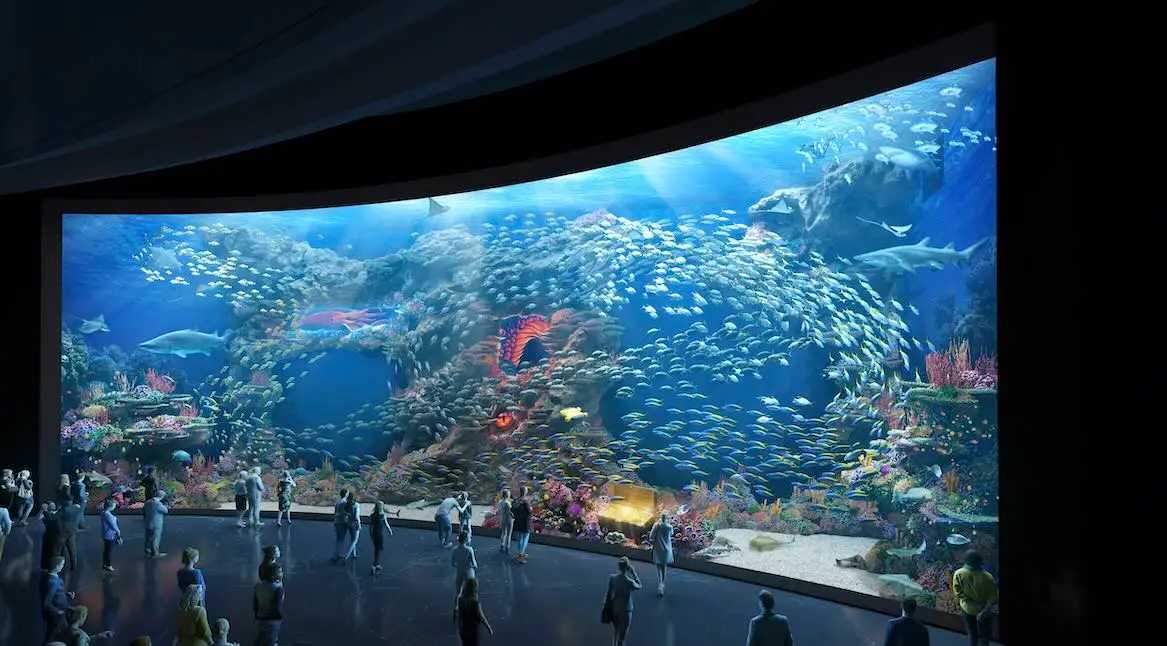
Table of Contents
Public Aquarium Design: From Vision to Reality
Designing a public aquarium begins with a clear vision, one that balances education, conservation, entertainment, and commercial success. Unlike private aquariums, public aquariums are multi-functional hubs that engage communities, support marine research, and attract tourism on a large scale.
Key elements of public aquarium design include:
- Layout planning for optimized visitor flow and experience.
- Thematic storytelling across exhibits.
- Strategic location and accessibility.
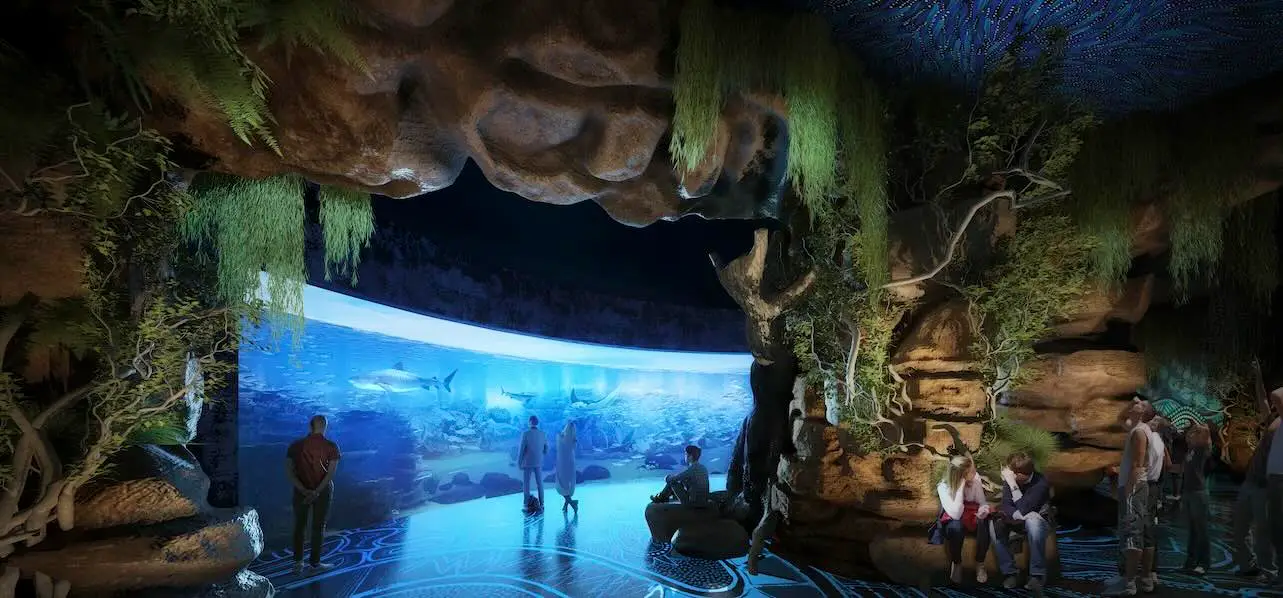
- Integration of educational zones and immersive experiences.
Proper public aquarium design not only maximizes physical space but also enhances long-term operational efficiency and visitor engagement.
Are aquariums ethical? Read all about the debate.
Construction of Aquarium: A Step-by-Step Approach
The construction of an aquarium is a highly specialized process involving regulatory compliance, environmental control systems, and structural precision. Success depends on the coordination between architects, engineers, marine biologists, and project managers.
Typical construction phases include:
- Feasibility & site analysis – Evaluating environmental and commercial factors.
- Permitting & approvals – Navigating local and environmental regulations.
- Structural development – Materials selection, tank engineering, waterproofing, etc.
- Life support systems (LSS) – Essential for sustaining marine life.
- Interior fit-out – Including lighting, theming, and exhibit installation.
Choosing experienced partners for the construction of aquarium systems ensures structural safety, sustainability, and a foundation for innovation.
Advanced Aquarium Technologies
Modern public aquariums rely on advanced technologies to deliver memorable, safe, and efficient experiences for both guests and aquatic life. These systems also play a crucial role in sustainability and operational cost management.
Key technologies include:
- Smart LSS (Life Support Systems) for automated water quality and filtration.
- Interactive exhibits using AR/VR to deepen visitor engagement.
- Energy-efficient lighting and climate control systems.
- IoT monitoring for tank conditions and operational performance.
Implementing advanced aquarium technologies not only enhances visitor satisfaction but also supports conservation goals and reduces long-term maintenance costs.
5-Year ROI Feasibility Framework
Every successful public aquarium project is grounded in a solid feasibility framework. A 5-Year ROI plan enables stakeholders to forecast revenue, manage risk, and optimize operational decisions from day one.
Core components of the 5-Year ROI feasibility framework:
- Revenue modeling from ticket sales, memberships, events, and retail.
- CapEx vs OpEx breakdown, including technology and staffing.
- Visitor traffic projections based on demographics and market trends.
- Scenario planning for risk management (e.g., economic downturns, maintenance).
Case studies from high-performing aquariums show that projects adhering to a disciplined 5-Year ROI model outperform those without structured financial planning.
Discover the challenges and solutions in building large aquariums.
Conclusion
Investing in public aquarium design is a complex but rewarding endeavor that requires vision, expertise, and financial strategy. By aligning design principles with advanced technologies and a clear ROI framework, developers and stakeholders can create experiences that are educational, sustainable, and profitable.
For organizations and investors considering public aquariums as long-term assets, the key takeaway is clear: combine innovation with accountability from day one.
Find out the financing solutions for entertainment developments.