
Interactive Museum Exhibits: Engaging the Modern Visitor through Technology
Museums are no longer silent halls filled only with static displays. Today’s audiences seek immersive, hands-on experiences that blend education, entertainment, and interactivity. This shift has given rise to interactive museum exhibits; installations powered by innovative exhibit design and cutting-edge museum technology. These experiences allow visitors to engage more deeply with content, creating memorable and meaningful cultural experiences. In this article, we explore how interactivity is redefining the museum experience for the modern visitor.

Table of Contents
What Are Interactive Museum Exhibits?
Interactive museum exhibits are dynamic installations designed to actively engage visitors rather than passively inform them. Unlike traditional displays, these exhibits invite physical or digital interaction, encouraging users to touch, move, explore, and participate.
Whether through touchscreens, augmented reality (AR), or responsive environments, interactive exhibits foster a sense of agency. Visitors don’t just observe, they contribute to the experience. This engagement boosts knowledge retention, emotional connection, and overall satisfaction.
Examples include:
- Touch-enabled displays with historical maps and timelines.
- Motion-sensor games explaining scientific principles.
- Virtual walkthroughs of ancient ruins using VR headsets.
These innovations are reshaping how people experience culture, transforming museums into vibrant spaces for exploration.
The Role of Exhibit Design in Visitor Engagement
Behind every successful interactive exhibit lies thoughtful interactive exhibit design. It’s not just about technology. Ιt’s about creating experiences that feel intuitive, accessible, and emotionally resonant.
Good design considers:
- User flow and behavior: How visitors approach and engage with the exhibit.
- Aesthetics and storytelling: Integrating visual design with narrative elements to evoke emotion.
- Accessibility: Making the experience inclusive for all abilities and age groups.
Designers often use gamification techniques and multi-sensory interactions to increase engagement. For example, exhibits may include soundscapes, tactile elements, or layered narratives that adapt based on user choices.
Ultimately, design transforms technology into storytelling, creating cultural experiences that are both educational and unforgettable.
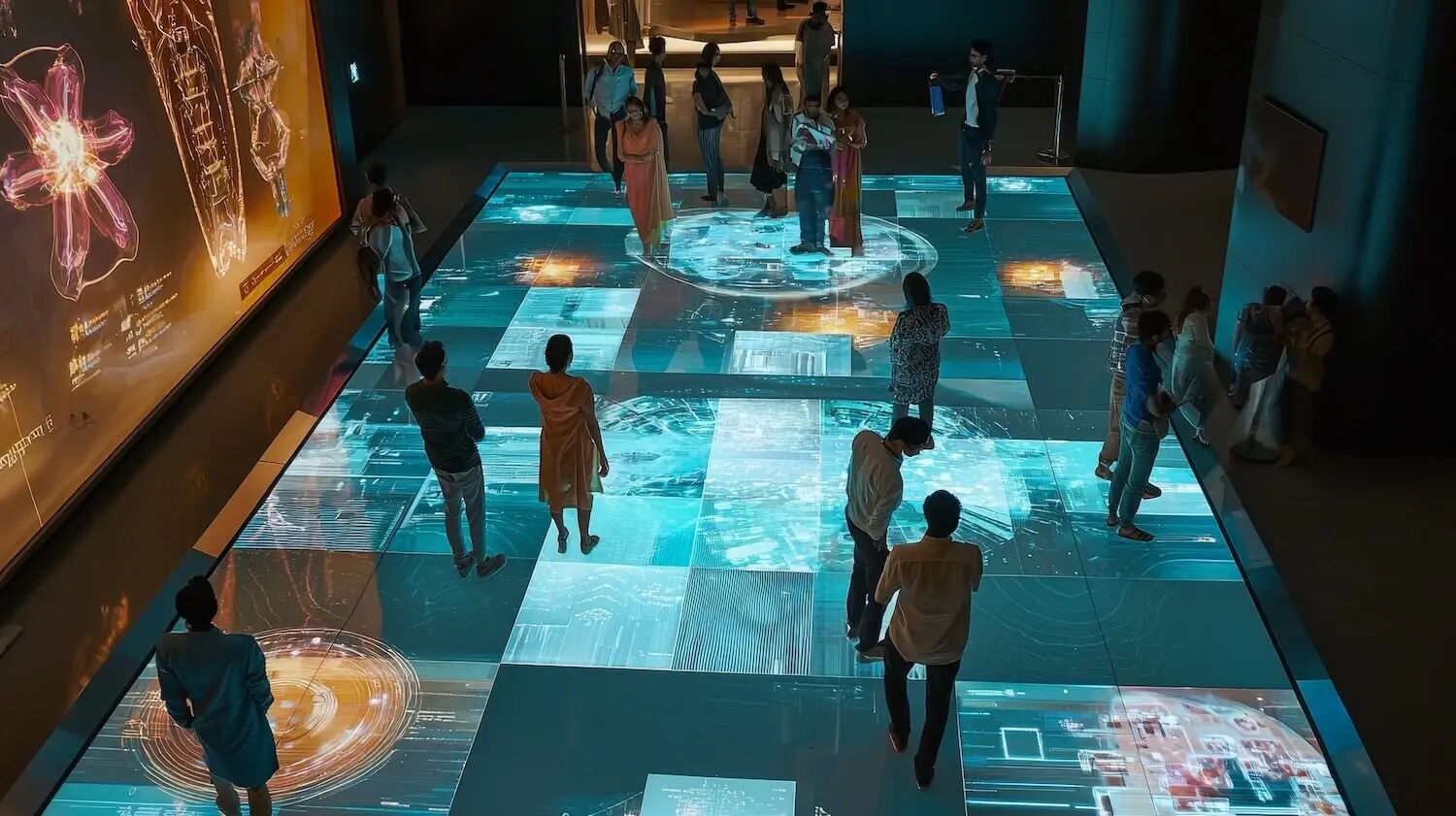
Interactive Museum Technology: Tools Behind the Experience
The power of interactive museum technology lies in its ability to turn passive content into participatory discovery. Today’s museums leverage a range of tools and platforms to enable this transformation.
Key technologies include:
- Augmented and Virtual Reality (AR/VR): Recreating historical scenes or allowing users to “step inside” an artwork.
- Gesture and motion sensors: Triggering visual or audio content based on user movement.
- Projection mapping: Bringing static objects to life with light and animation.
- RFID/NFC tagging: Personalizing content for each visitor.
- Digital asset management systems: Powering the development operations and backend of large, dynamic content collections.
By integrating these technologies into the fabric of exhibitions, museums can create responsive, evolving environments that reflect user interaction, a major leap forward in how interactive museum exhibits function today.
The Future of Interactive Museum Exhibits
Looking ahead, interactive museum exhibits are poised to become even more personalized, immersive, and intelligent. Emerging trends include:
- AI-powered storytelling that adapts to each visitor’s learning style.
- Hyper-personalization using visitor data to tailor content.
- Sustainable design with modular, energy-efficient components.
- Remote interactivity, allowing users to engage with exhibits from home.
However, this future comes with challenges: balancing technology with authenticity, maintaining accessibility, and ensuring that digital enhancements don’t overshadow the core mission of museums, to preserve and share human knowledge.
Still, with smart integration and thoughtful design, the future of interactive museum technology promises to be just as inspiring as the stories museums are built to tell.
To sum up, the era of static displays is fading. Through strategic interactive exhibit design and advanced museum technology, cultural institutions are reimagining what it means to visit a museum. These experiences not only educate but also inspire, connect, and transform.
As visitor expectations evolve, so must the spaces we create, ensuring that every museum visit becomes a journey of discovery, powered by interactivity and rich in cultural experiences.