
Developer’s Checklist: 12 Steps to Start a Commercial Aquarium Project
Launching a commercial aquarium is a high-investment, high-reward venture that blends education, entertainment, and environmental awareness. Whether you aim to build a public aquarium, a high-end retail aquarium business, or a marine-themed experience center, careful planning is key. This checklist outlines the 12 essential steps to start a commercial aquarium project, helping you navigate from idea to grand opening.
Table of Contents
1. Conduct a Comprehensive Feasibility Study
Before any design or budgeting begins, carry out an aquarium feasibility study to determine if the concept is viable in your chosen location. Analyze:
- Local market demand and target audience
- Existing competitors and pricing strategies
- Potential visitor volume and seasonal trends
- Legal/environmental constraints
This data-driven assessment helps validate your idea and secure buy-in from investors or stakeholders.
2. Define Your Concept and Target Audience
Clarify the type of aquarium you want to build. Will it be saltwater, freshwater, or mixed? Will it serve as a tourist attraction, educational center, or luxury design showroom?
Identify your primary audience: families, schools, tourists, corporate clients, or high-net-worth individuals. This shapes everything from location choice to marketing tone.
3. Create a Detailed Aquarium Business Plan
A strong aquarium business plan is crucial for aligning your team and attracting financing. Include:
- Mission and vision
- Service offerings (e.g., tours, memberships, events, custom aquariums)
- Marketing and operational strategies
- Startup costs and revenue projections
- Staffing requirements
Use data from your feasibility study to support your financial assumptions.
4. Secure Financing and Initial Capital
Building a commercial aquarium requires substantial investment. Estimate costs for:
- Facility design and construction
- Tanks and life support systems
- Licenses and legal setup
- Initial livestock and staffing
Explore funding options like bank loans, investors, government grants, or partnerships with educational institutions.
5. Establish Legal Structure and Obtain Licenses
Choose a legal structure (e.g., LLC, corporation) based on your goals, tax needs, and liability exposure.
You will need:
- Business registration
- Sales tax ID
- Animal welfare and import licenses (for selling or displaying live animals)
- Environmental permits (for water usage and waste)
These are all the necessary permits and licenses you need to obtain.
Learn more about the role of aquariums in education and environmental awareness.
6. Choose the Ideal Location
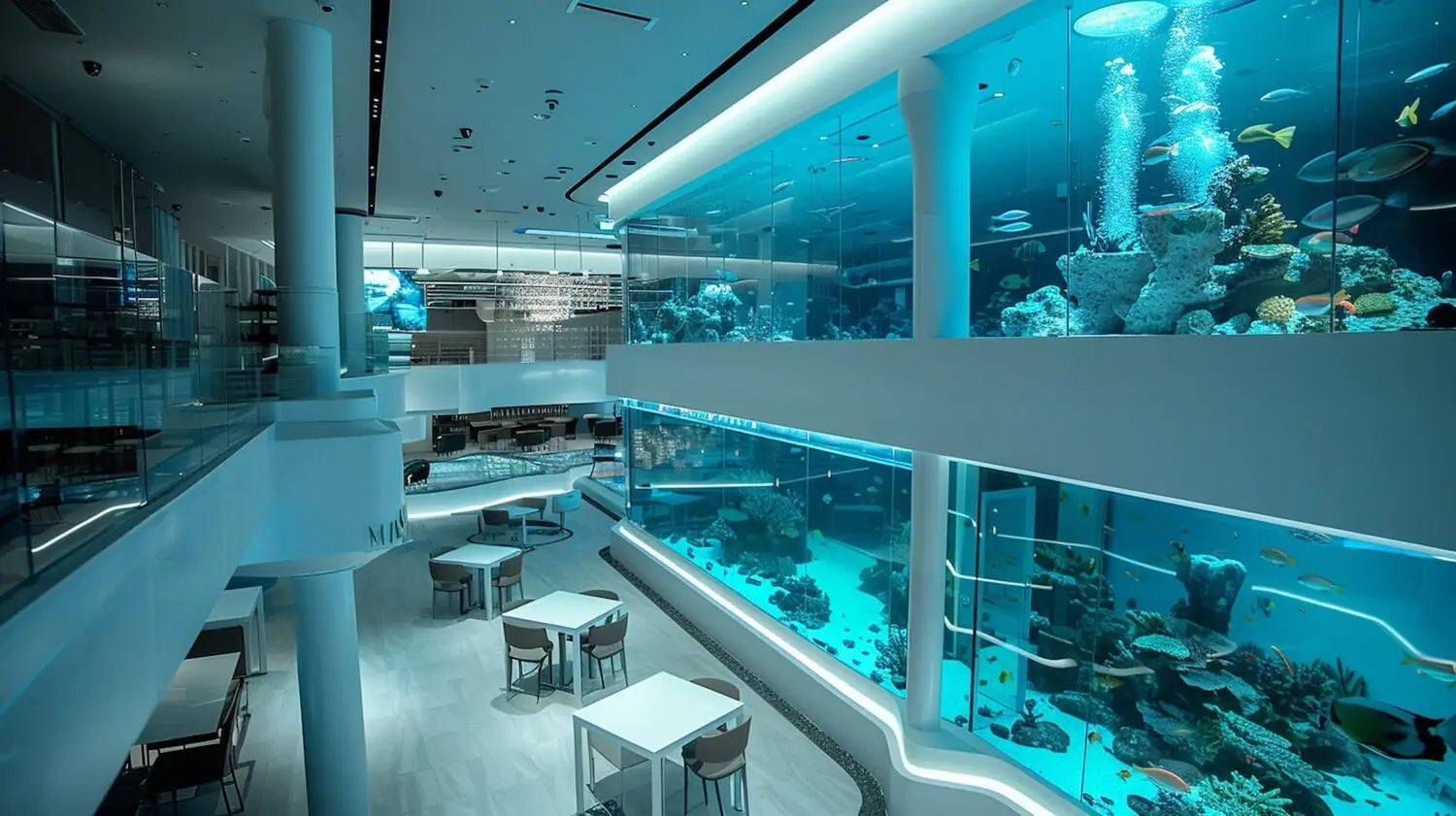
Location affects visibility, foot traffic, and infrastructure compatibility. When evaluating sites, consider:
- Zoning regulations
- Accessibility and parking
- Proximity to tourist zones, schools, or malls
- Space for tanks, filtration, and emergency systems
A well-placed facility drives traffic and simplifies logistics.
7. Design the Facility for Function and Experience
Work with architects and aquarium engineers to plan a layout that balances visitor experience with operational needs. Include:
- Wide pathways and clear sightlines
- Interactive zones for education or entertainment
- Durable, water-resistant surfaces
- Emergency access and equipment storage areas
Use lighting, signage, and sound design to enhance storytelling.
8. Install Life Support Systems (LSS) and Equipment
Life support systems (LSS) are the backbone of a successful commercial aquarium. Install systems for:
- Mechanical, chemical, and biological filtration
- Temperature regulation (heaters/chillers)
- Lighting and UV sterilization
- Automated water changes and circulation
Proper integration ensures water quality and aquatic health.
9. Source High-Quality Livestock and Supplies
Partner with reputable wholesalers and certified suppliers to acquire:
- Saltwater and freshwater species
- Coral, live rock, and aquatic plants
- Tanks, substrates, lighting, décor, and chemicals
Ensure animals are ethically sourced and legally imported.
10. Implement a Quarantine and Health Protocol
Protect your entire ecosystem by quarantining all new fish and aquatic animals for a minimum of 30 days. Use dedicated tanks to:
- Monitor for diseases or parasites
- Apply preventative treatments
- Gradually acclimate animals to display conditions
This reduces loss and prevents outbreaks.
11. Hire and Train Knowledgeable Staff
Build a team that balances science, operations, and customer service. Key roles may include:
- Aquarists or marine biologists
- Systems engineers or maintenance technicians
- Educators and visitor experience guides
- Retail or hospitality staff
Train all personnel on fish care, safety protocols, and emergency response.
12. Launch Your Aquarium and Monitor KPIs
Plan a high-impact launch to generate buzz. Host an opening event, engage with local media, and offer promotions. After launch:
- Track visitor numbers, revenue, and satisfaction
- Use CRM and analytics tools to improve operations
- Gather feedback for exhibit or service upgrades
Continuous improvement is key to long-term success.
To sum up, starting a commercial aquarium is a multifaceted process requiring clear vision, scientific understanding, and business acumen. By following these 12 structured steps, you can turn your concept into a thriving, immersive destination that inspires and educates.
Have a project in mind?